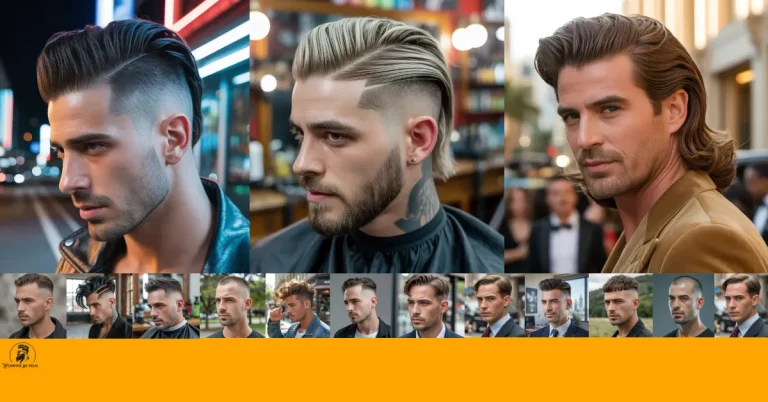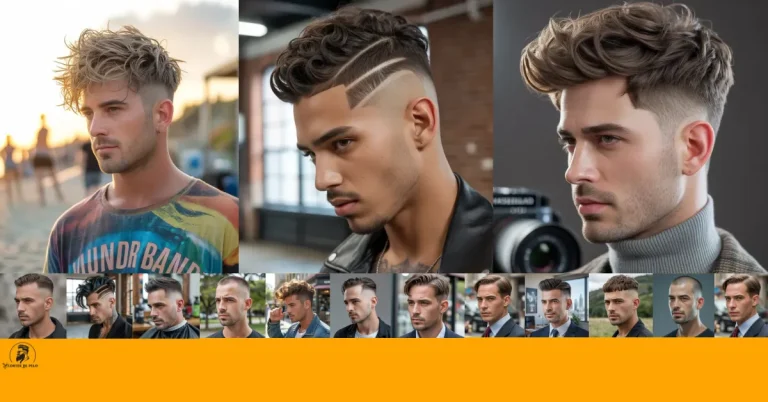
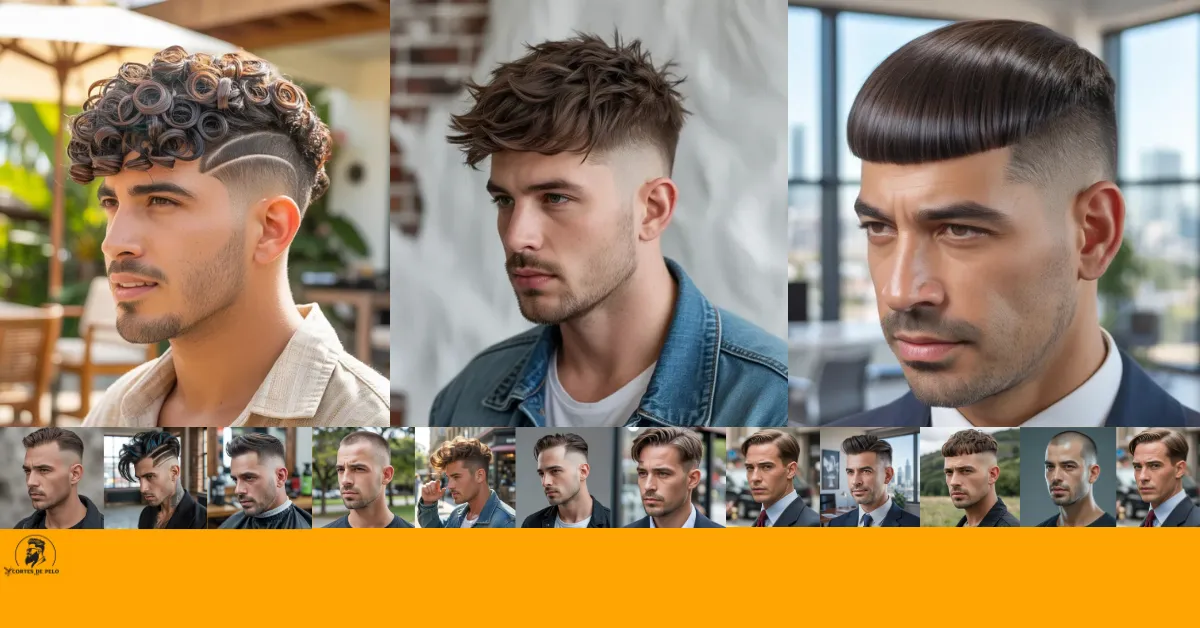
Caesar Haircut: The Ultimate Guide to Imperial Style 2026
Introduction: The Return of the Emperor
The Caesar haircut represents one of the most iconic, timeless, and versatile styles in the history of men’s barbering. Named after the Roman emperor Julius Caesar, who, according to legend, concealed his receding hairline with a short fringe, this hairstyle has transcended two millennia to become a standard of understated elegance and refined masculinity.
At its core, the Caesar haircut is characterized by keeping the hair at a uniform, short length (generally between 2 and 5 centimeters) all over the head, with a horizontal fringe that falls along the forehead. The apparent simplicity of this style hides considerable technical sophistication: precision in execution determines the difference between an elegant Caesar and an ordinary cut.
Modern trends have revitalized the Caesar haircut by incorporating advanced techniques such as fading, texturizing, and customization. What began as a practical solution for baldness has transformed into an intentional style statement, embraced by executives, athletes, celebrities, and men of all ages who value understated elegance.
In this comprehensive guide, we’ll explore every facet of the Caesar haircut : its fascinating history, modern execution techniques, contemporary variations incorporating fade and texture, tips tailored to every face and hair type, and the maintenance secrets that preserve its regal essence.
History: From the Roman Senate to Modern Catwalks
The history of the Caesar haircut is intertwined with the history of Western civilization itself. In ancient Rome, short, well-groomed hair symbolized discipline, social status, and civic virtue. Busts and coins depicting Julius Caesar show a man with short, slightly curly hair combed forward in what modern historians identify as the earliest documented use of the style.
Emperor Caesar, aware of his incipient baldness, adopted this hairstyle to minimize the visibility of his receding hairline. The historical irony is that what began as a disguise became a trend: other Romans imitated the style, establishing a pattern that would be repeated throughout the centuries.
During the Renaissance, the Caesar haircut experienced a resurgence in Italy as part of the classical revival. Florentine and Venetian nobles adopted more elaborate versions of the style, often pairing it with meticulously sculpted beards. Portraits from the period show how the Caesar adapted to the aesthetic standards of each era without losing its essential structure.
The 20th century solidified the Caesar haircut in American popular culture. In the 1950s and 60s, figures like George Clooney in his early career, and later sports stars like Russell Crowe in “Gladiator,” reintroduced the style to the collective imagination as a symbol of quiet strength and natural leadership.
The 1990s marked the modern heyday of the Caesar cut, when celebrities like Eminem, George Clooney, and numerous professional athletes adopted it as their signature style. The film “Gladiator” (2000) represented a defining moment: Russell Crowe’s look inspired millions of men to request the “gladiator cut” at barbershops worldwide.
Modern trends have refined the Caesar haircut through precise layering techniques, intentional texturizing, and adaptations for all hair types. The style has demonstrated a remarkable capacity for evolution: while maintaining its fundamental silhouette, it incorporates contemporary elements that keep it relevant in 2026.
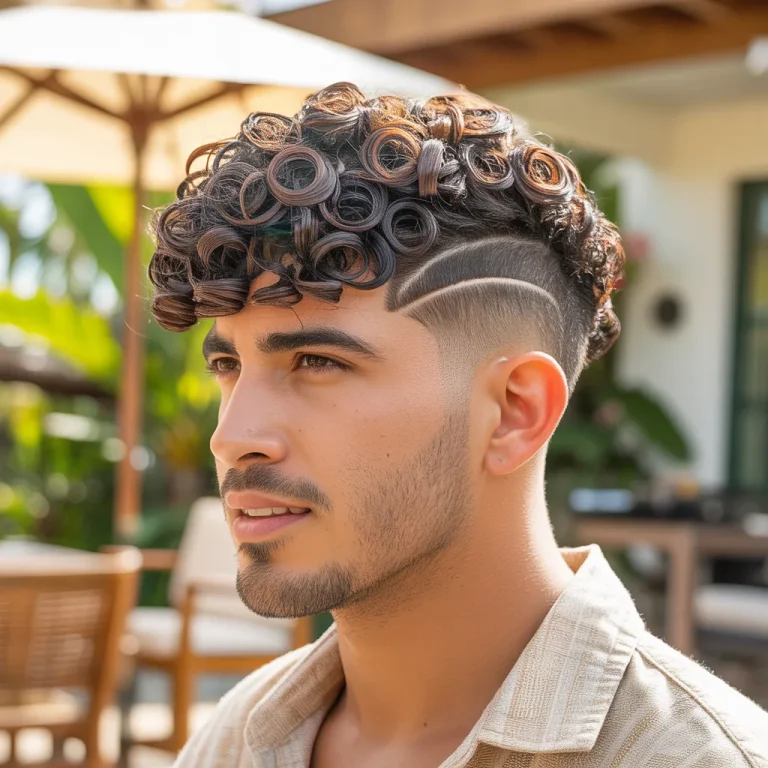
Anatomy of the Perfect Caesar Haircut
The Fundamental Silhouette
The classic Caesar haircut is defined by three non-negotiable elements:
1. Uniform Length The hair is kept at a consistent length all over the head, typically between 2 and 5 centimeters. This uniformity creates the characteristic silhouette that distinguishes the Caesar cut from other short haircuts.
2. Horizontal Bangs The most distinctive element: a straight or slightly textured fringe that falls over the forehead line, generally between 1 and 3 centimeters below the natural hairline.
3. Defined Contours The sides and nape of the neck have clean and precise lines, whether through a soft taper, fade or sharp lines according to the modern variant.
Modern Execution Techniques
Performing a quality Caesar haircut requires mastery of specific techniques:
Classic taper with a soft, scissor-cut finish that maintains the conservative essence of the style. Ideal for traditional professional environments. The classic taper or low taper for men maintains a conservative essence.
Integrated Fade Incorporation of low, mid or high fade to add contemporary feel and structural definition.
Texturizing the Bangs: Point cutting or razor cutting techniques to add movement and avoid rigidity in the front section.
Precise Lineup: Defining contour lines with a knife or precision machine for a flawless finish.
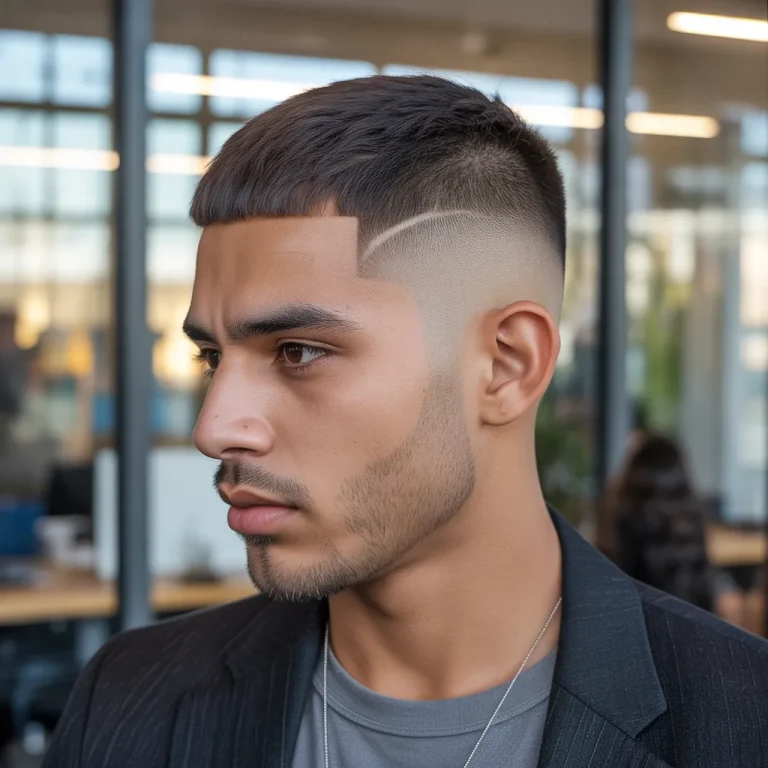
Face Types and Compatibility
Oval Face: The Ideal Shape
Men with oval faces can wear any variation of Caesar haircut with excellent results. The natural symmetry allows them to experiment with more or less textured bangs, pronounced or conservative fades, and varying lengths.
Recommendations:
- Classic Caesar with a tapered top for a timeless look
- Caesar with a mid fade for controlled modernity
- Moderate texture in bangs for natural movement
Round Face: Structuring with Precision
For round faces , the Caesar haircut should create the illusion of length and angles. The key lies in manipulating the bangs and sides.
Effective strategies:
- Bangs with vertical texture that add height
- Short or faded sideburns to visually narrow
- Avoid very thick bangs that accentuate roundness
- Consider a Caesar with a high fade for maximum structure.
Square Face: Softening the Jawline
Square faces benefit from Caesar haircuts when they are tailored to counteract prominent angles.
Recommended approaches:
- Slightly layered bangs to soften the forehead
- Sides with a soft taper (avoid very short cuts)
- Texture instead of hard lines
- Slightly longer length for visual roundness
Long Face: Balancing Proportions
For faces that are longer than they are wide, the Caesar haircut should avoid additional elongation.
Tactics:
- Longer, thicker bangs that cover more of the forehead
- Longer side panels to create width
- Avoid excessive height at the crown
- Horizontal texture instead of vertical
Heart-Shaped Face: Harmonizing the Forehead
With a wide forehead and narrow chin, the Caesar haircut can balance proportions through specific techniques.
Solutions:
- Bangs with enough density to balance the forehead
- Sides with moderate volume
- Avoid very short cuts in the sideburn area
Caesar Haircut Styles
1. Classic Caesar
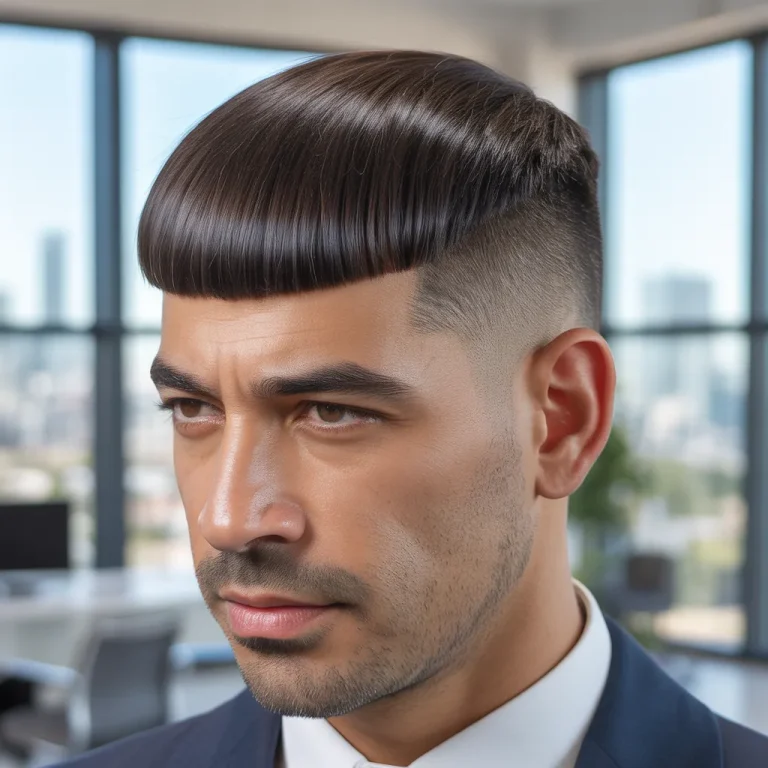
The classic Caesar haircut maintains the purity of the original design: uniform length of 3-4 centimeters throughout the head, straight and dense bangs, soft tapered sides, natural or semi-matte finish.
Technical specifications:
- Upper length: 3-4 cm uniform
- Bangs: Straight, 1-2 cm thick, falling over the forehead
- Sides: Progressive taper from 2 cm to 0.5 cm
- Nape: Soft taper or light fade
- Texture: Minimal, clean finish
Hairstyling technique:
- Apply light pomade or mattifying cream to damp hair
- Comb your bangs forward with a fine-toothed comb
- Distribute product evenly with your fingers
- Adjust bangs according to forehead shape
- Set with a light spray if necessary
Ideal contexts: Conservative corporate environments, formal professions, mature men who value discretion.
Maintenance: Visits to the barber every 2-3 weeks to maintain the precision of the fringe.
2. Textured Caesar
This modern variant incorporates point cutting techniques to add movement and dimension to the bangs and top section.
Features:
- Upper length: 4-5 cm with texture
- Bangs: Layered with a natural part
- Sides: Taper or low fade depending on preference
- Finish: Matte for a contemporary look
Ideal for: Young men, creative environments, those who want modernity without excess.
3. Caesar con Low Fade
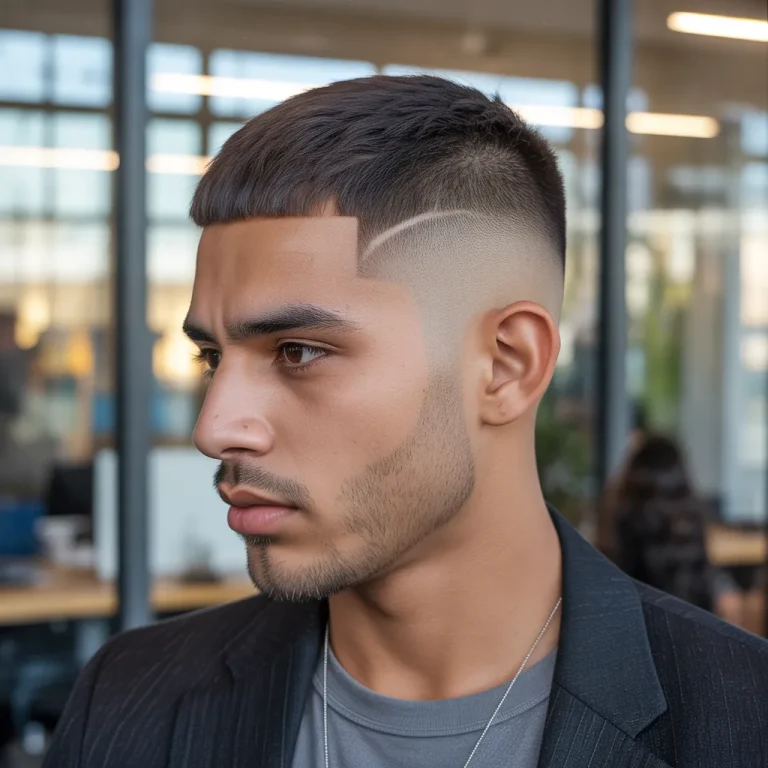
The addition of the low fade transforms the classic Caesar into a crisp, contemporary option, maintaining the essence of the style while adding modern definition.
Advantages:
- Defines the facial structure with precision
- Facilitates daily maintenance
- Add conservative youth
- It works in modern professional environments.
Specs:
- Fade starting 1-2 cm from the ear
- Smooth fade towards the top
- Bangs kept at classic length
- Sharp contour line around ears
4. Caesar con Mid Fade

The mid fade raises the starting point to the temples, creating greater contrast between the classic silhouette of the Caesar and the contemporary sides.
Features:
- Fade starting between temples and timeline
- Visible but elegant transition
- Upper part held at 3-4 cm
- Balance between tradition and modernity
5. Caesar con High Fade
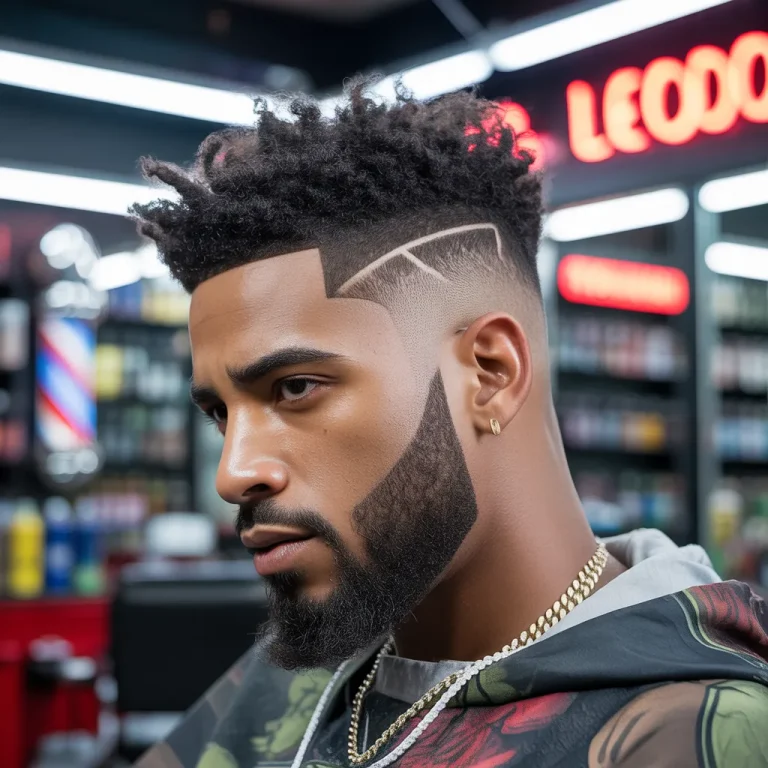
For the boldest, the high fade raises the fade to the crown, maximizing contrast and focusing attention on the signature fringe. The high fade maximizes visual contrast.
Specs:
- Fade starting near the top hairline
- Maximum skin exposure on the sides
- Top with classic length (3-4 cm)
- Bangs as a dominant element
Considerations: Youthful style, requires frequent maintenance, ideal for warm climates.
6. Caesar con Skin Fade (Bald Fade Caesar)
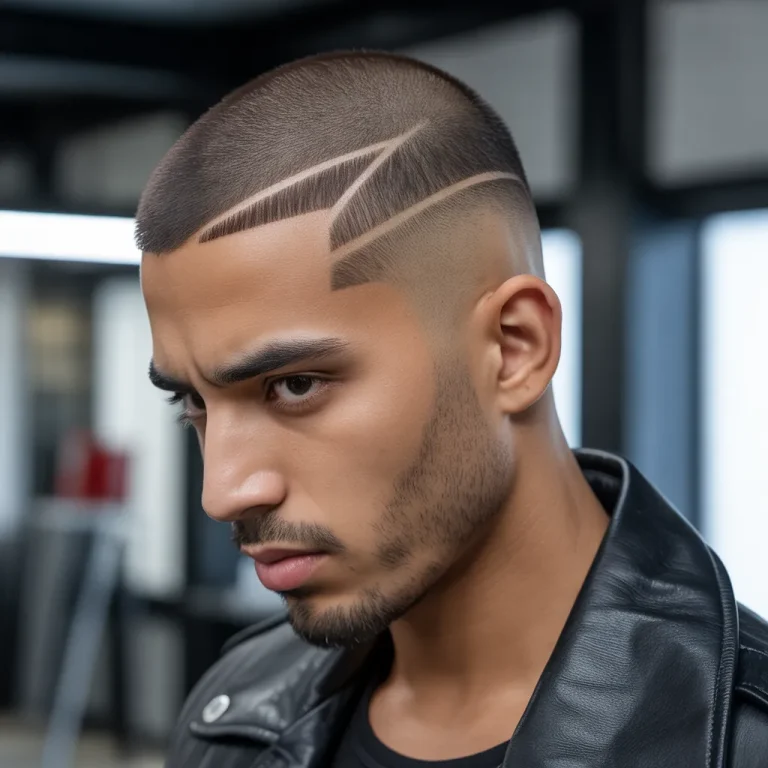
The skin fade takes the gradient right up to the skin, offering maximum definition and a dramatic frame for the classic Caesar silhouette.
Variants:
- Classic skin fade: Smooth transition to skin
- Skin fade with lineup: Precisely defined contour lines
- Textured skin fade: Top with natural parting
Maintenance: Visits to the barber every 7-10 days to maintain sharpness.
7. Caesar Despeinado (Messy Caesar)

This contemporary interpretation brings texture to the fringe, creating an “intentionally tousled” look that adds youthfulness and relaxation to the imperial style.
Key elements of the look:
- Bangs with multiple parting and direction
- Slightly longer length (4-5 cm)
- Absolute matte finish
- Sides with fade or taper depending on preference
Essential products: Matte clays, texturizing pastes, volumizing powders.
8. Caesar for Curly Hair
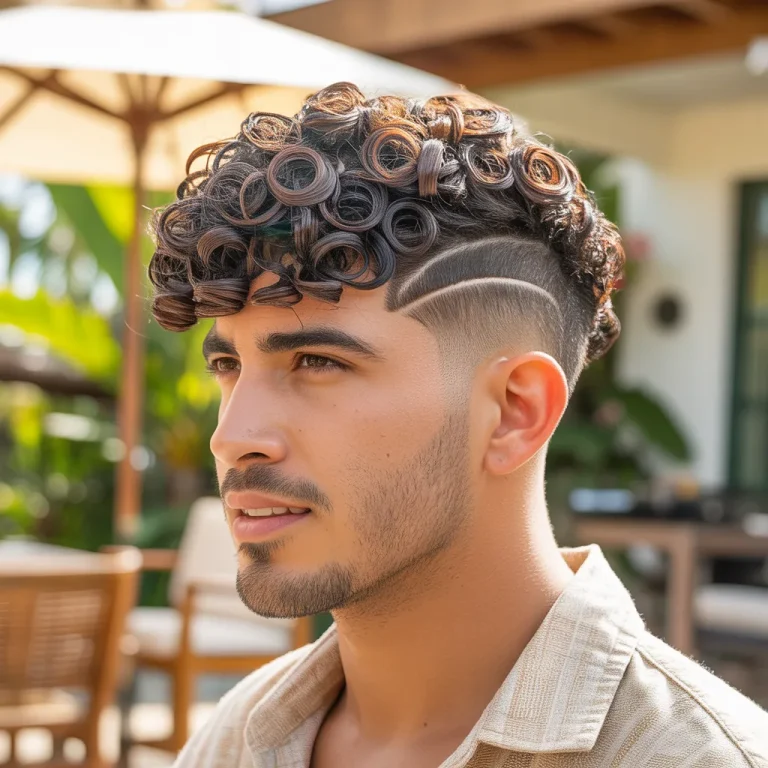
Especially adapted for curly or wavy hair , this Caesar works with the natural texture to create a distinctive style that maintains the essence of the original design.
Specific techniques:
- Layers that define the curl pattern
- Bangs with soft curls falling over forehead
- Careful gradients to avoid a “helmet” effect
- Hydrating and curl-defining products
9. Caesar for Fine or Receding Hair
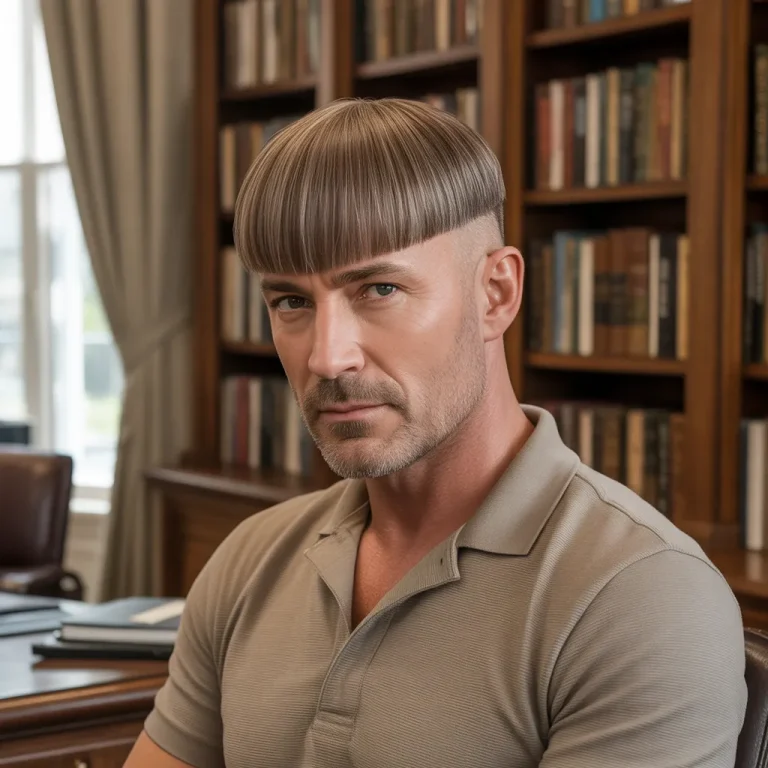
The Caesar haircut is historically ideal for those with receding hairlines or early baldness , as the short fringe can be strategically placed.
Strategies:
- Textured bangs to create the illusion of density
- Uniform length that avoids dramatic contrasts
- Densifying and volumizing products
- Consider micropigmentation techniques if desired
10. Caesar with Integrated Beard
The combination of a Caesar haircut with beard styles creates a complete facial frame that balances the simplicity of the hair with the character of the beard.
Combination variants:
- Caesar + short beard: Contemporary professional look
- Caesar + medium beard: Classic-modern balance
- Caesar + long beard: Dramatic and artistic contrast
Hairstyling and Styling Techniques
For Classic Caesar
- Preparation: Slightly damp hair
- Product: Light ointment or mattifying cream
- Application: Distribute evenly from the roots
- Hairstyle: Bangs swept forward with a fine comb
- Adjustment: Fingers for minimal natural texture
- Fixation: Light spray if necessary
Estimated time: 3-5 minutes
For Caesar with Texture
- Preparation: Almost dry hair
- Product: Clay or matte paste
- Application: Rub between palms, distribute on bangs
- Texturing: Thumb and index finger for separation
- Adjustment: Manipulate individual strands
- Finish: Texturizing powder if you need more body
Estimated time: 5-8 minutes
For Caesar with Volume
- Preparation: Apply volumizing product to damp hair.
- Drying: With a hairdryer and round brush, moving forwards
- Texture: Apply clay when it is 90% dry
- Parting: Use thumb and index finger to create sections in the bangs
- Finish: Adjust according to desired density
Estimated time: 8-12 minutes
Caesar Haircut Product Guide
Discover specific products and tools .
For a classic and polished look
Light ointments:
- Layrite Natural Matte Cream
- Uppercut Deluxe Featherweight
- American Crew Forming Cream
Features: Medium hold, natural or semi-matte finish, even distribution.
For a Modern Textured Look
Clays and pastes:
- Hanz de Fuko Claymation
- Baxter of California Clay Pomade
- TIGI Bed Head Matte Separation
Features: Matte finish, separation and definition, flexible fixation.
For Fine Hair
Volume boosters:
- Light volumizing mousse
- Texturizing dusts (Schwarzkopf OSIS+ Dust It)
- Sea salt sprays
For Curly Hair
Rhizo definers:
- Shea Moisture Coconut & Hibiscus
- Cantu Shea Butter for Natural Hair
- DevaCurl SuperCream
Maintenance and Care
Frequency of Visits to the Barber
Table
| Style | Frequency | Reason |
|---|---|---|
| Caesar con skin fade | 7-10 days | Maintain fade clarity |
| Caesar con high fade | 10-14 days | Definition of the gradient |
| Caesar con mid fade | 2-3 weeks | Style/cost balance |
| Caesar con low fade | 2-3 weeks | Bangs precision |
| Classic Caesar | 2-3 weeks | Maintain uniform shape |
| Caesar with texture | 3-4 weeks | Maintain definition |
Care between cuts
- Washing: 2-3 times per week
- Conditioner: Focus on ends
- Product: Apply to dry or slightly damp hair
- Hairstyle: Bangs swept forward daily to maintain direction
Signs You Need a Haircut
- The bangs lose their shape and fall over the eyes
- The sides begin to bulge
- The product no longer distributes evenly.
- Frizz or unruly ends appear
2026 Trends in Caesar Haircuts
1. Caesar with Subtle Color
Coloring techniques that add dimension to bangs: very subtle highlights, slightly contrasting tones, or natural sun effects.
2. Texture in the Bangs
Trend towards bangs with intentional parting, natural movement and a “lively” look instead of perfectly straight lines.
3. Custom Gradients
Fades that follow the individual anatomy of the skull, creating unique transitions that frame each face in a specific way.
4. Combination with a well-developed beardbout:blank
The contrast between the simplicity of the Caesar and medium to long beards creates looks with maximum visual impact.
5. Sustainability in Products
Increased demand for ointments, waxes and treatments with organic ingredients, without parabens or sulfates.
Explore more 2026 haircut trends to keep your style up-to-date.
Common Mistakes and How to Avoid Them
Mistake 1: Bangs Too Short
Problem: Excessive exposure of the forehead, the opposite of the desired effect.
Solution: Keep bangs 1-3 cm long depending on forehead shape and hair density.
Error 2: Excess Product
Problem: Heavy bangs, greasy appearance, loss of natural texture.
Solution: Start with the minimum amount, distribute completely, and evaluate before adding more.
Error 3: Ignoring Hair Type
Problem: Straightening techniques applied to curls or vice versa. Straight hair provides the ideal base for a classic Caesar.
Solution: Adapt the Caesar to the natural texture, consult with a specialized barber.
Error 4: Irregular Maintenance
Problem: Bangs that lose their shape, bulky sides, lost essence of style.
Solution: Set appointment schedule according to the chosen variant.
Mistake 5: Ignoring Face Shape
Problem: Bangs that accentuate unwanted features (roundness, excessive length).
Solution: Consult with a barber about specific adaptations for your face shape.
Conclusion: The Emperor’s Eternal Reign
The Caesar haircut has demonstrated a unique ability to adapt without losing its essence over two millennia. From Julius Caesar’s concerns about his baldness to the trends of 2026, this style has maintained its relevance precisely because of its sophisticated simplicity and inherent versatility. The key to mastering the Caesar cut lies in understanding that it’s not simply “a short cut with bangs,” but an intentional structure that can be tailored to each individual. Whether you prefer the clean lines of the classic with a soft taper, the modernity of the Caesar with a fade, or the expressiveness of the textured Caesar, this style offers a framework for personal distinction.
In 2026, the Caesar haircut continues its evolution, incorporating contemporary texturizing and fading techniques while honoring its imperial heritage. It’s not a passing fad, but a men’s barbering standard that will continue to dominate trends for decades to come. Invest in finding a barber who understands the precision a Caesar cut requires, experiment with variations that best suit your lifestyle, and embrace regular maintenance as an investment in your personal appearance. A Caesar haircut , when executed masterfully, yields dividends of confidence, authority, and timeless elegance.
Your perfect Caesar cut awaits. Like the emperor it’s named after, this cut bestows upon you an invisible crown of distinction.
For more inspiration on modern haircuts and style trends, we recommend visiting GQ , where you’ll find the latest hairstyle recommendations and celebrity looks.
FAQs
Does the Caesar haircut work for advanced baldness? The Caesar cut is historically ideal for early-stage baldness. For advanced cases, consult a specialist about adaptations or alternatives.
How long does it take to style a Caesar? Between 2 and 10 minutes, depending on the style. Classic styles are quicker; textured styles require more attention.
Can I wear a Caesar dressing if I have very curly hair? Absolutely. The Caesar dressing for curly hair is a distinctive and elegant option that works with the hair’s natural texture.
Is the Caesar cut appropriate for men of all ages? The Caesar cut is timeless. Classic variations flatter mature men; textured fades suit younger men.
How do I tell the difference between a Caesar cut and a regular short cut? The forward-swept bangs and the uniform length are the distinguishing features. A regular short cut may not have defined bangs.
Does a Caesar fringe require a hairdryer? Not necessarily, although a hairdryer helps to style the fringe in specific variations.