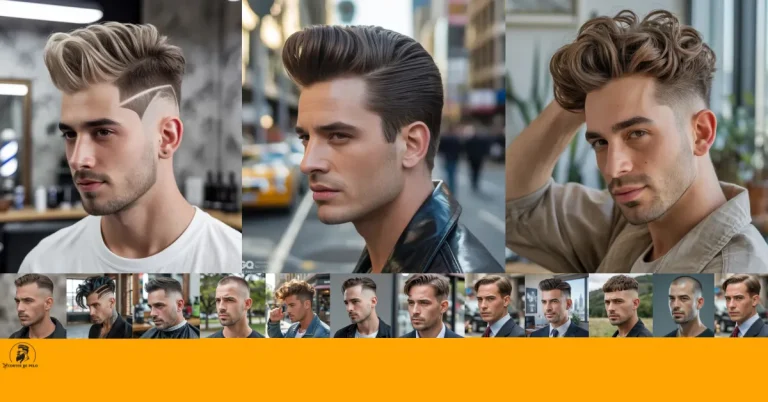
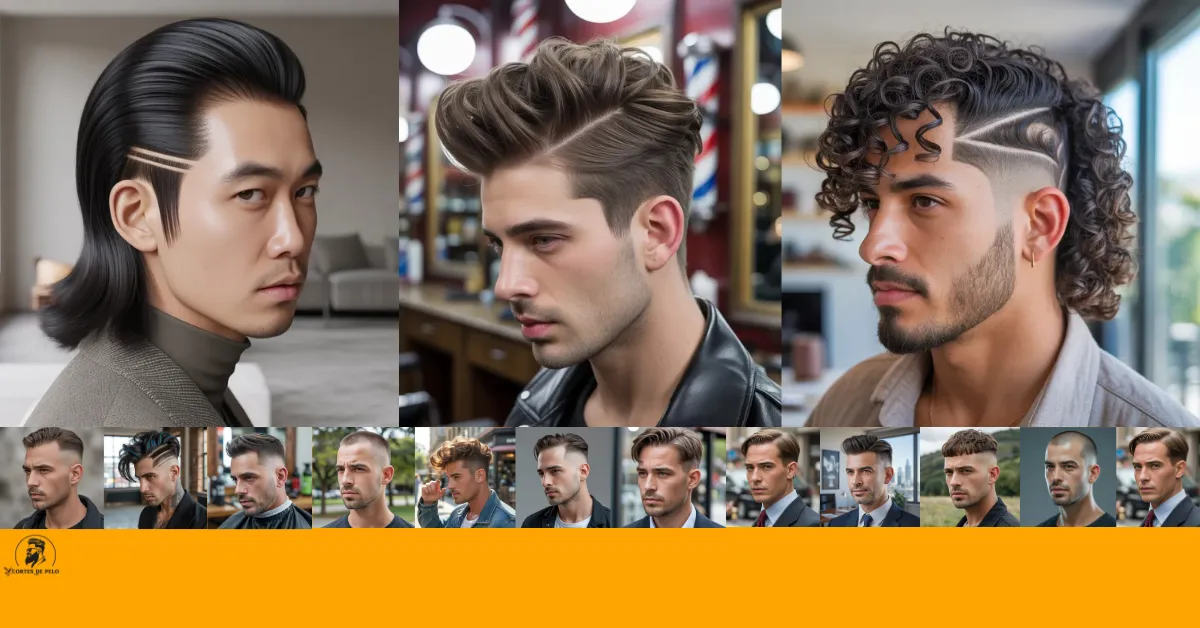
Side Part Haircuts for Men: A Complete Style Guide for 2026
Side part haircuts for men represent one of the most versatile, elegant, and timeless styles in modern barbering. Also known as a “side part” or “side trim,” this cut has dominated men’s trends for decades, adapting to each era while maintaining its essence of sophistication and refined masculinity.
In this comprehensive guide, we’ll explore all the side part haircuts for men available in 2026, from classic versions that evoke Hollywood glamour to contemporary interpretations with fades and modern textures. You’ll learn to identify the perfect style for your face shape, hair texture, and lifestyle, and receive professional advice on styling, products, and maintenance.
What exactly is the Side Part Cut?
The side part haircuts for men is characterized by a sharp parting of the hair to one side of the head, usually aligned with the eyebrow arch or the natural whorl at the crown. This parting creates two distinct sections: a longer top that is styled to the opposite side, and sides that can range from classic scissor cuts to modern clipper fades.
The versatility of men’s side part haircuts lies in their adaptability. They work equally well in conservative corporate environments as in creative and casual settings, depending on variations in length, texture, and finish. From the Wall Street executive to the indie musician, the side part offers a framework that every man can personalize to suit his individual style.
History and Evolution of the Male Side Part
The history of men’s side-part haircuts dates back to the early 20th century, when the film industry began defining standards of male beauty. In the 1920s, stars like Rudolph Valentino popularized the sleek, side-parted look as a symbol of European sophistication. During Hollywood’s golden age of the 1930s and 40s, actors such as Cary Grant, Clark Gable, and Humphrey Bogart cemented the side part as the quintessential hairstyle for the modern gentleman.
The 1950s brought a rebellious evolution with Elvis Presley, who maintained the side-part structure but added volume and a rock and roll attitude. The British 1960s, led by The Beatles and later The Rolling Stones, softened the cut with longer hair but kept the side part as a distinctive element.
The 80s and 90s experimented with excessive gel and height, before giving way to the minimalist aesthetic of the 2000s. Today, men’s haircuts are reviving the best of each era: the elegance of the 40s, the attitude of the 50s, and the modern techniques of fades and texturizing. Now, side-part haircuts for men represent a perfect blend of tradition and innovation.
Face Type Analysis for Side Part
Before choosing from the various side-part haircuts for men , it’s crucial to understand how your face shape interacts with each style. A successful choice will enhance your natural features, while a mistake can throw off your facial proportions.
Oval Face: The Universal Shape
Men with oval faces have a definite advantage when choosing side-part haircuts . This balanced shape, with a forehead slightly wider than the chin and a gently curved jawline, allows for experimentation with all variations of the side part without significant restrictions.
Specific recommendations:
- Classic side part with medium-length sides for a professional look
- Side part with volume to maximize natural symmetry
- Textured side part for a relaxed yet structured style
- Avoid extremes that excessively lengthen the face
Round Face: Creating Angles
For round faces, where length and width are similar and angles are soft, side-part haircuts for men should create the illusion of structure and length. The goal is to avoid additional roundness and generate vertical lines that elongate the face.
Recommended strategies:
- Side part with volume at the crown (not on the sides)
- Short or tapered sides to visually narrow
- Considerable top length styled upwards and to the side
- Avoid symmetrical cuts or cuts with a lot of volume in the cheeks
Square Face: Softening the Jawline
Square faces feature a wide forehead, a strong jawline, and prominent angles. Side-part haircuts for men with this face shape should balance the bone structure without adding harshness.
Ideal options:
- Classic side part with soft texture on top
- Sides with sufficient length so as not to accentuate the jaw
- Slightly layered bangs falling over the forehead
- Natural or matte finishes that avoid rigidity
Long Face: Balancing Proportions
For faces that are longer than they are wide, the challenge with side-part haircuts for men is to avoid excessive elongation. The goal is to create visual width and avoid adding height to the top.
Effective tactics:
- Side part with lateral volume instead of vertical
- Sides with greater length for balance
- Bangs that partially cover the forehead
- Avoid hairstyles styled upwards or with a lot of height.
Heart-Shaped Face: Harmonizing Proportions
With a wide forehead and narrow chin, side part haircuts for men with heart-shaped faces should add width to the lower part of the face.
Recommended approaches:
- Side part with volume in the cheeks and sideburn area
- Textured sides with some length
- Avoid very short cuts on the sides that further narrow the bottom part
Diamond-Shaped Face: Highlighting the Cheekbones
This rare shape with prominent cheekbones, a narrow forehead, and a narrow jaw requires side-part haircuts for men that soften the angles and add width to the forehead.
Optimal solutions:
- Side part with bangs or strands falling over the forehead
- Volume controlled at the top
- Sides neither too short nor too long
Classic Side Part Haircut Styles for Men
1. Classic Executive Side Part
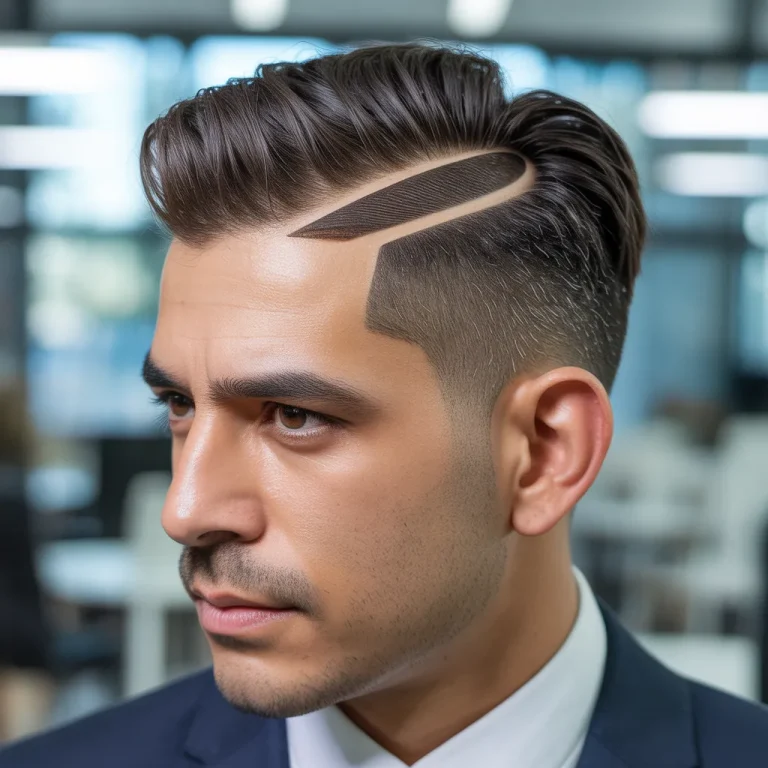
The classic side part haircuts for men is the epitome of timeless elegance. Inspired by Hollywood icons of the 1940s and 50s, this style remains relevant in boardrooms and at contemporary formal events.
Technical specifications:
- Sides cut with scissors between 1 and 2 centimeters
- Top part with a length of 5 to 8 centimeters
- Defined line aligned with the arch of the eyebrow
- Smooth transition between sides and top
- Glossy or semi-matte finish
Professional hairstyling technique:
- Apply water-based pomade to damp hair
- Create the part with a fine-tailed comb following the arch of the eyebrow
- Comb the larger section towards the opposite side of the part
- Adjust the finish according to the required formality
- Fix with light hairspray if necessary
Ideal contexts: Business meetings, weddings, formal events, job interviews in conservative industries.
Maintenance: Visits to the barber every 3-4 weeks to maintain the shape and proportions.
2. Side Part Ivy League
A preppy variant of men’s side part haircuts , the Ivy League style (also known as Princeton or Harvard Clip) combines the structure of the side part with a slightly longer length and a more natural finish.
Distinctive features:
- Short but not shaved sides (approximately 2-3 cm)
- 4-6 cm top layer with soft overlays
- A subtle line, not necessarily sharp
- An “academic” and polished appearance without being overly formal
- Versatility for styling forward, backward or to the side
Ideal for: University students, young professionals, semi-formal environments, those seeking versatility between casual and formal.
Modern Styles with Gradient (Fade)
3. Side Part con Low Fade
The addition of a low fade transforms men’s side part haircuts into crisp, contemporary options. The low fade starts just above the ears and gradually blends upwards. For a conservative, professional look, the side part with a low fade offers definition without excess, similar to the low taper haircut techniques for men that maintain clean, natural lines.
Advantages of low fade:
- It maintains a professional and conservative appearance.
- It adds definition and structure to the cut.
- Facilitates daily maintenance
- It works in traditional corporate environments.
- It creates a smooth transition that frames the face.
Specs:
- Fade starting 1-2 cm from the ear
- Faded to the skin or very short at the nape of the neck
- Top part 5-10 cm according to preference
- Defined or natural parting depending on the desired style
4. Side Part con Mid Fade
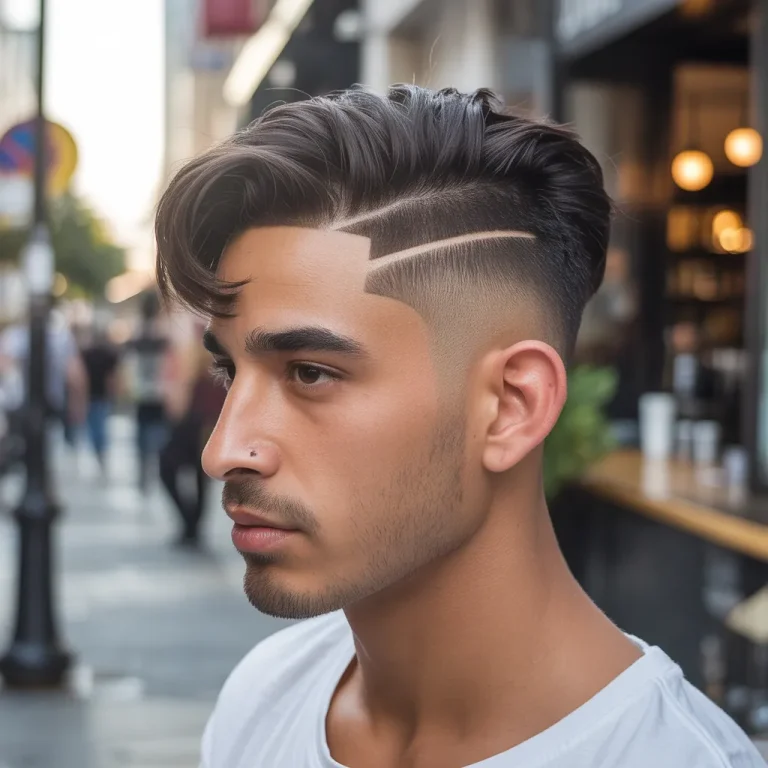
The mid-fade raises the starting point to the temples, creating more dramatic and modern side part haircuts for men . This variation offers a perfect balance between boldness and versatility. The side part with a mid-fade increases visual contrast and can be combined with mid-taper haircut techniques for a more dramatic yet controlled effect.
Features:
- Fade starting between the temples and the temporal hairline
- Greater contrast between the sides and the top
- Visual effect of greater height at the crown
- Ideal for medium to thick hair
Recommended styles:
- Textured side part with mid fade for a youthful look.
- Classic side part with mid fade for controlled modernity
- Side part with volume and mid fade for visual impact
5. Side Part con High Fade
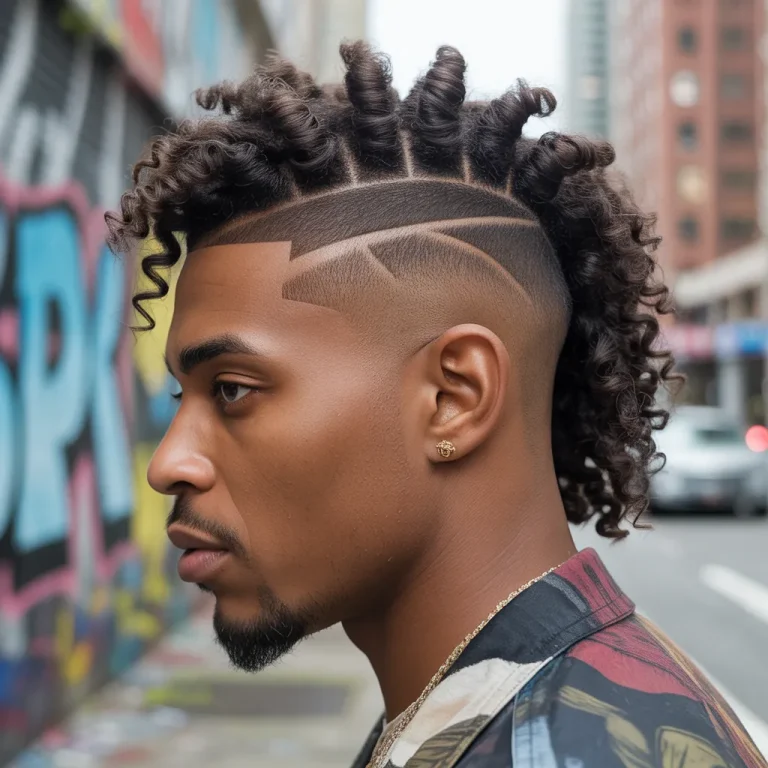
For the boldest, the high fade takes the fade all the way to the crown, creating side-part haircuts for men with maximum contrast and contemporary urban style. For maximum urban impact, the side part with a high fade or a high-fade cut fully exposes the sides and focuses all attention on the styled top.
Technical specifications:
- Fade starting near the top hairline
- Maximum skin exposure on the sides and back
- Upper part with significant length (7-12 cm) to compensate
- Line generally defined precisely (hard part)
Considerations:
- Requires frequent maintenance (every 1-2 weeks)
- Ideal for thick hair that maintains volume on top
- Perfect for warm climates
- Predominantly youthful and urban style
6. Side Part con Skin Fade (Bald Fade)
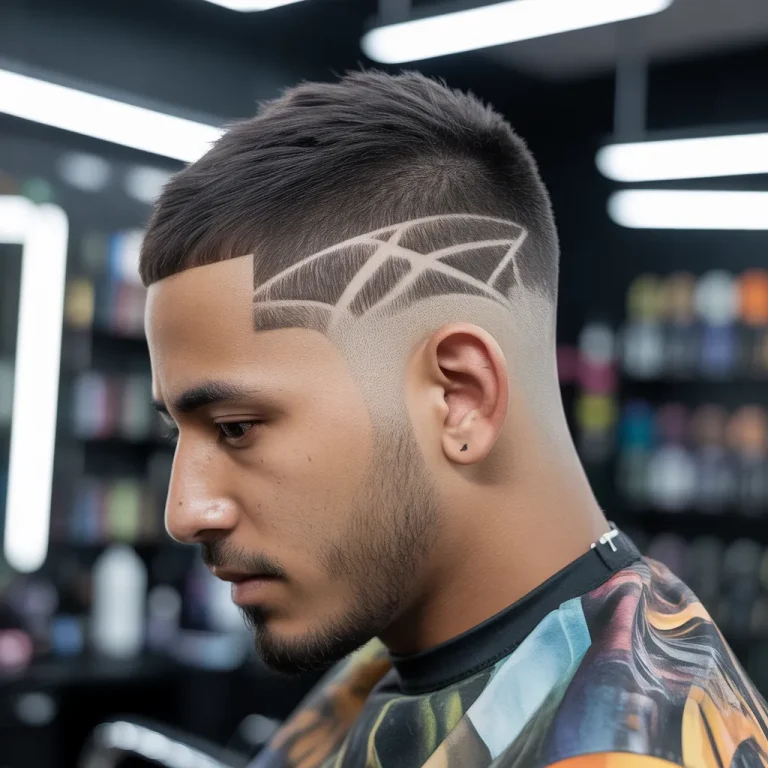
The skin fade takes the fade completely to the skin, offering men’s side part haircuts with maximum definition and sharpness. This technique requires considerable professional skill.
Variants:
- Classic skin fade: Smooth transition to skin
- Skin fade with hard part: Shaved line for extreme definition
- Skin fade with design: Lines or patterns on the sides, gradient
Maintenance: You need to visit the barber every 7-10 days to maintain the sharpness of the fade.
Textured and Contemporary Styles
7. Natural Textured Side Part
Side-part haircuts for men with textured hair abandon the polished finish in favor of movement, dimension, and a natural look. This style celebrates hair texture instead of fighting it.
Texturing techniques:
- Point cutting for tapered ends
- Slide cutting for inner covers
- Razor cutting for smooth texture and movement
- Thinning shears to reduce density without losing length
Product application:
- Apply texturizing clay or matte paste to dry or slightly damp hair
- Work the product from the roots to the ends
- Use fingers to create separation and definition
- Adjust according to the desired level of “messy” hair
Ideal for: Hair with natural waves, casual weekend looks, beach styles, those who reject the rigidity of traditional finishes.
8. Messy Side Part
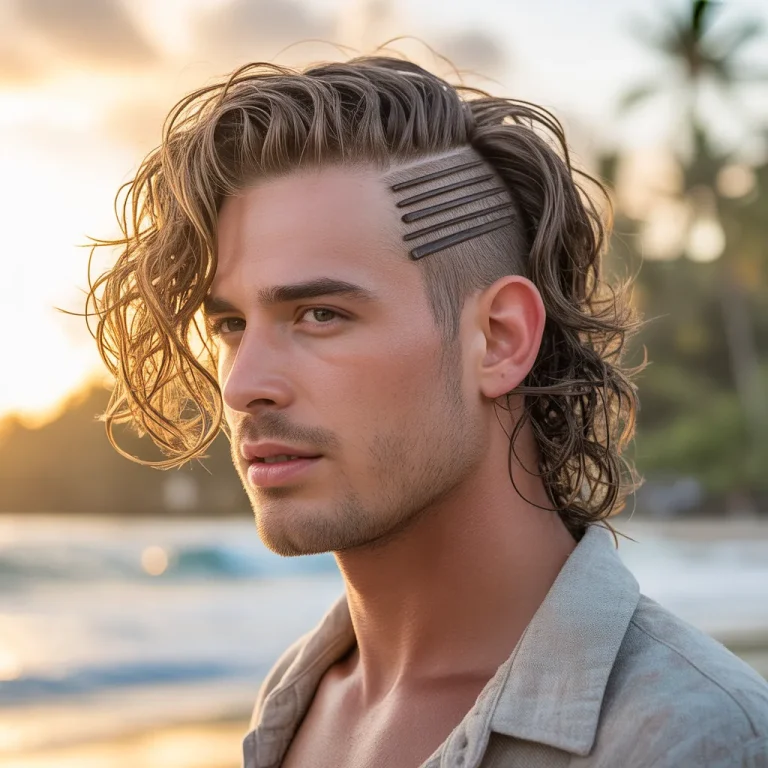
The messy side part haircut for men maintains the basic structure of the side part but with an intentionally disheveled finish. The “just woke up” look requires technique to appear authentic.
Key elements of the look:
- A defined but not perfectly straight line
- Visible texture with separated strands
- Natural volume without excessive styling
- Absolute matte finish
Essential products: Clays, matte pastes, texturizing powders, sea salt sprays.
9. Side Part with Quiff
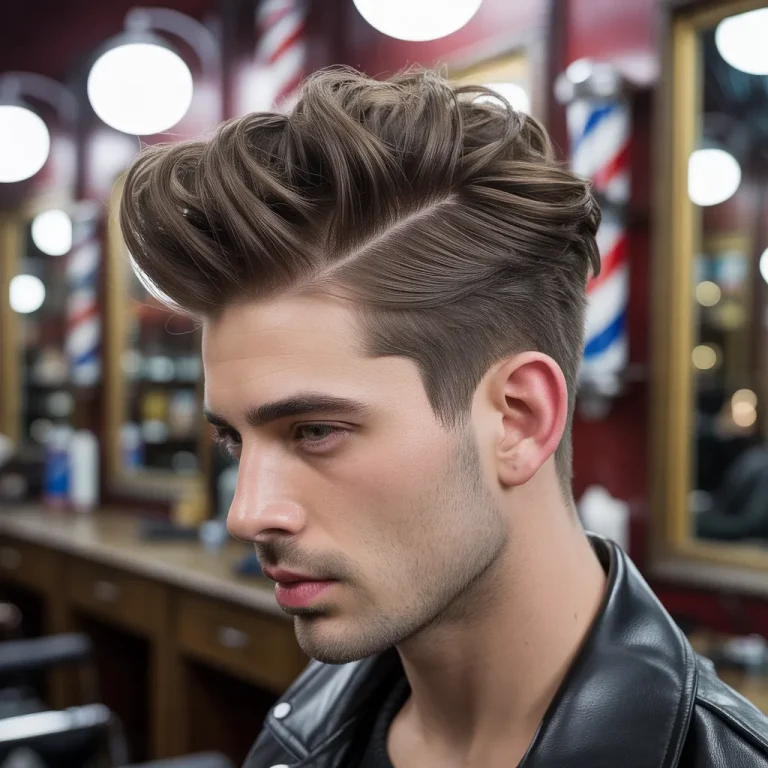
Combining the structure of a side part with the volume of a quiff, these side part haircuts for men offer drama and height around the forehead. A popular variation is the side part with a quiff , which combines the side part with the characteristic volume of a quiff for a dramatic and modern look.
Styling technique:
- Dry with a round brush, lifting the front section
- Apply volumizing product to roots
- Comb back and to the side simultaneously
- Create height at the front crown
- Secure with strong hold hairspray
Variants:
- Soft quiff: Moderate volume, natural movement
- Dramatic quiff: Maximum height, structured finish
- Textured quiff: Volume with separation and dimension
Hair Styles by Length
10. Side Part Corto (Short Side Part)
For those who prefer practicality, short side-part haircuts for men offer uncomplicated style. The total length does not exceed 5-6 cm on top.
Advantages:
- Minimal maintenance
- Quick drying without the need for a hairdryer
- Suitable for conservative environments
- Ideal for fine hair or receding hairlines.
- Perfect for athletes or active lifestyles
Specific styles:
- Buzz cut with side part: Extremely short with a defined part
- Crew cut with side part: Military classic with a touch of elegance
- Short textured side part: Short but with dimension and movement
11. Side Part Medio (Medium Side Part)
Medium length represents the perfect balance in side part haircuts for men , offering styling versatility without the maintenance of long hair.
Length range: 6-10 cm on top, 1-4 cm on the sides depending on the fade.
Hairstyling versatility:
- Polished back for formal occasions
- Towards the side with a natural fall for everyday wear
- Textured for a casual look
- High volume for special events
12. Side Part Largo (Long Side Part)
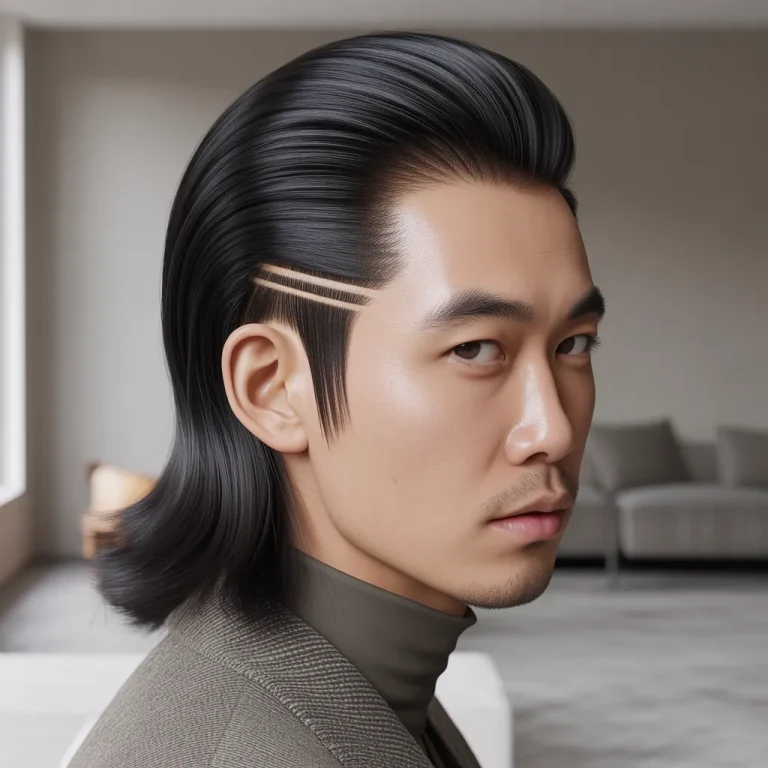
For the more daring, side part haircuts for long men allow for creative experimentation and styles that defy conventions.
Lengths: 10-15 cm or more at the top.
Possible styles:
- Side part slick back: Long hair styled back with a side part
- Side part comb over: Hair crossed from the part to the opposite side
- Side part with undercut: Shaved or very short sides with long hair on top
- Long, messy side part: An “artistic” look with movement and dimension
Considerations: Requires more maintenance, stronger fixing products, and patience during growth.
Specific Styles by Hair Type
13. Side Part for Straight Hair
Straight hair provides the ideal base for polished and structured men’s side part haircuts , although it may lack natural volume.
Solutions for adding body:
- Short internal layers to create structure
- Blow-drying techniques for root volume
- Volumizing products such as mousses and salt sprays
- Consider soft perms for artificial waves (optional)
Recommended styles:
- Classic bright side part
- Side part with volume and quiff
- Textured side part with layers
14. Side Part for Wavy Hair
Natural waves add dimension and movement to side part haircuts for men , creating looks with their own character.
Wave management:
- Work with the natural direction of the waves
- Define with products specifically designed for curls
- Avoid combing when it’s dry to prevent frizz
- Consider the “curly side part” with specific techniques
Optimal styles:
- Natural textured side panel
- Side part with fade and defined waves at the top
- Long side part with loose waves
15. Side Part for Curly Hair
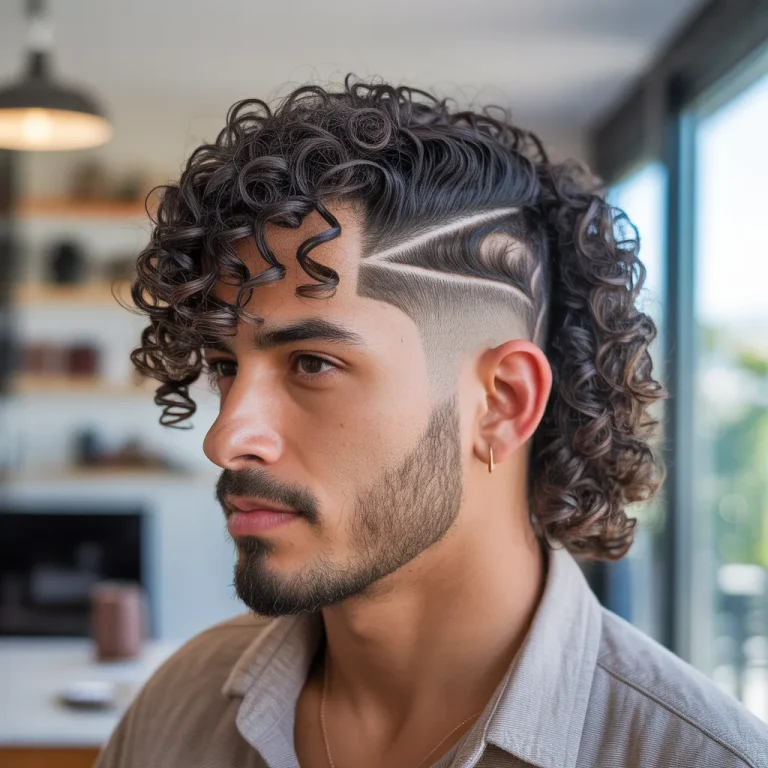
Curls require specialized techniques within men’s side part haircuts , respecting the natural texture while creating structure.
Specific techniques:
- Careful gradients to avoid the “helmet” effect
- Layers that allow curls to move freely
- A line that works with the direction of growth
- Hydrating and curl-defining products
Featured styles:
- Curly side part con low fade
- Side part with defined curls and long top
- Texturized curly side part para look contemporáneo
16. Side Part for Thick Hair
Dense hair allows for side-part haircuts for men with visual impact and substantial structure, although it requires control to avoid excessive volume.
Control strategies:
- Thinning to reduce density
- High gradients to balance proportions
- Strong fastening products for control
- Chemical straightening techniques if desired (optional)
Appropriate styles:
- Side part with high fade to reduce weight
- Textured side part to distribute density
- Side part with extreme undercut
17. Side Part for Fine or Receding Hair
For hair with lower density, side part haircuts for men should create the illusion of thickness and work intelligently with areas of lower density.
Maximization techniques:
- Strategic layers to create body
- Volumizing products for roots
- Moderate lengths (neither too short nor too long)
- Styled to one side to cover weak areas
- Consider micropigmentation or hair treatments
Recommended styles:
- Textured side part
- Side part with volume at the crown
- Classic side part with densifying products
Advanced and Specialized Techniques
18. Hard Part (Shaved Line)
The hard part elevates men’s side part haircuts to levels of extreme precision by shaving the part with a razor or precision clipper.
Specs:
- A 3-5 mm wide line shaved to the skin
- Usually combined with gradients (fade)
- Requires frequent maintenance (every 5-7 days)
- It can be single or double (double hard part)
Care: Apply soothing aftershave products, protect from the sun to avoid burns on the shaved line.
19. Side Part with Designs (Hair Tattoos)
For maximum expression, side part haircuts for men can incorporate geometric designs, lines, or patterns on the faded sides.
Popular designs:
- Simple parallel lines
- Geometric shapes (triangles, squares)
- Abstract curves and waves
- Initials or personal symbols
- Tribal or cultural designs
Considerations: They require specialized barbers, constant maintenance, and are not appropriate for conservative environments.
20. Asymmetrical Side Part
This variation of the side part haircut for men plays with unequal lengths on each side of the part, creating avant-garde and artistic looks.
Features:
- One side significantly longer than the other
- A deep line that accentuates the asymmetry
- Usually combined with undercuts or extreme fades
- Predominantly youthful and creative style
Product Guide by Style
To maintain your perfect style, you need the right products; discover our selection of products and tools for men .
For Classic and Polished Looks
Water-based ointments:
- Soft Firm Hold
- Layrite Superhold
- Uppercut Deluxe Pomade
- Reuzel Blue (Strong Hold High Sheen)
Features: Medium to strong hold, natural shine, easy to wash out, reactivatable with water.
For Modern Matte Looks
Clays and pastes:
- Hanz de Fuko Claymation
- Baxter of California Clay Pomade
- American Crew Fiber
- TIGI Bed Head Matte Separation
Features: Matte or natural finish, texture and separation, flexible to strong fixation.
For Fine Hair
Volume boosters:
- Volumizing mousse (apply to roots)
- Texturizing dusts (Schwarzkopf OSIS+ Dust It)
- Sea salt sprays
- Lightweight styling foams
For Thick or Unruly Hair
Maximum control:
- Strong waxes (Got2b Glued, Gatsby)
- Extreme hold gels
- Oil-based ointments (for permanent fixation)
- Pre-styling smoothing serums
Essential Tools
- Hair dryer with nozzle: Essential for volume and direction
- Round brush: For tension and curl when drying
- Fine tail comb: For part definition
- Flat brush: For smoothing and distributing product
Daily Hairstyling Routine Step by Step
For Side Part Classic Polished
- Washing: Use shampoo and conditioner suitable for your hair type
- Towel dry: Remove excess moisture without rubbing aggressively
- Apply heat protectant: If you will be using a hairdryer
- Product distribution: Apply a pea-sized amount of ointment, emulsify in palms.
- Defining the part: Use a fine-toothed comb following the arch of the eyebrow
- Directional drying: Use a nozzle dryer and a flat brush, blow-drying in the opposite direction to the final hair fall for volume.
- Final styling: Comb towards the desired side when 80% dry
- Finishing: Adjust with a fine comb, apply hairspray if necessary
Estimated time: 10-15 minutes
For Natural Textured Side Part
- Washing: Shampoo, light conditioner on ends
- Drying: Towel until excess is removed, optional blow dryer at roots for volume only
- Product: Clay or matte paste, small pea-sized amount
- Application: Rub between palms, distribute from roots to tips
- Texturing: Use fingers to create separation and definition
- Part definition: Use a comb or fingers for a smooth line.
- Final adjustment: Manipulate individual strands as desired
Estimated time: 5-8 minutes
Hair Maintenance and Care
Frequency of Visits to the Barber
Table
| Style | Recommended Frequency | Reason |
|---|---|---|
| Side part con skin fade | Every 7-10 days | Maintain fade clarity |
| Side part con high fade | Every 10-14 days | Definition of gradient |
| Side part con mid fade | Every 2-3 weeks | Balance between style and cost |
| Side part con low fade | Every 3-4 weeks | Less obvious growth |
| classic side part | Every 3-4 weeks | Maintain shape and proportions |
| Side part largo | Every 4-6 weeks | Maintaining healthy tips |
Care between cuts
- Washing: 2-3 times a week to avoid dryness, unless the hair is very oily.
- Conditioner: Apply to mid-lengths and ends, avoid roots if hair is fine.
- Heat protection: Always before using a hairdryer or straightener
- Hydration treatments: Weekly hair masks for dry or treated hair
- Oils: Optional for very dry hair or for scalp massages
Signs You Need an Immediate Haircut
- The sides begin to “bulge” or lose their shape
- The line becomes blurred and difficult to define
- The hair on top falls over the eyes or loses structure
- The gradients show a clear growth line
- The style requires twice the product to maintain.
- Frizz or split ends appear (in long haircuts)
2026 Trends in Side Part Haircuts for Men
1. Return of the Classic with a Modern Touch
Side-part haircuts for men in 2026 revive the elegance of the 1940s and 50s, but with contemporary texturizing techniques and matte finishes. “Modern vintage” dominates the runways and social media.
2. Texture as a Main Element
The glossy, plasticky look is abandoned in favor of natural textures, movement, and a “living” appearance. Matte products and point-cutting techniques are essential.
3. Custom Gradients
Fades are evolving into unique transitions that follow the individual anatomy of the skull, creating truly personalized side part haircuts for men .
4. Sustainability in Products
Increased demand for ointments, waxes and treatments with organic ingredients, without parabens or sulfates, cruelty-free and eco-friendly packaging.
5. Inclusion of All Textures
The side part is suitable for Afro, Asian, Latin, and Caucasian hair types with specific techniques for each, eliminating the notion that it is a style exclusive to certain groups.
6. Hybridization of Styles
Combinations such as side part + mullet, side part + wolf cut, or side part + elements of ethnic hairstyles create unique expressions of male identity.
Common Mistakes and How to Avoid Them
Error 1: Choosing the Wrong Line
Problem: Forcing a part against the natural direction of the hair creates resistance, an unsightly look, and difficulty in styling.
Solution: Identify the cowlick at the crown. The parting should work with, not against, this growth point. Alternatively, align it with the arch of the brow on the side where you want more volume.
Error 2: Excess Product
Problem: Fat accumulation, excessive weight, dirty appearance, and hair that separates into greasy strands.
Solution: Start with a minimal amount (half a thumbnail), spread evenly between palms, apply, and assess before adding more. Remember: you can always add more, but you can’t remove it.
Error 3: Ignoring Hair Type
Problem: Using products designed for thick hair on thin hair (excessive weight) or vice versa (insufficient hold).
Solution: Fine hair: lightweight, volumizing products, body-drying techniques. Thick hair: strong products, thinning techniques, density control.
Error 4: Irregular Maintenance
Problem: Letting the cut grow out uncontrollably ruins the designed proportions, causing the side part to lose its essence.
Solution: Schedule appointments with your barber based on your chosen style. Fades require discipline; classic cuts allow for more flexibility.
Error 5: Ignore the Professional Context
Problem: Wearing a side part with elaborate designs or extreme gradients in conservative environments can negatively affect professional perception.
Solution: Adapt the style to the workplace dress code. Classic side-part or low-fade styles are suitable for traditional offices; bolder variations are ideal for creative industries or personal use.
Mistake 6: Neglecting Hair Health
Problem: Focusing solely on style without considering the health of the scalp and hair leads to thinning, hair loss, or damage.
Solution: Include hydrating treatments, heat protection, and occasional breaks from heavy products. Consider supplements if hair is weak.
FAQs
What face shape suits a side part best?
Oval, square, and diamond face shapes benefit most from the asymmetry and structure a side part provides.
How do I know which side to part my hair on?
Typically, follow your natural cowlick or part line; if unsure, the left side is traditionally considered more formal.
What length should the top be for a classic side part?
Aim for 2 to 4 inches on top to allow enough length for styling while maintaining a clean, controlled look.
How short should the sides be for a modern side part?
Taper or fade the sides to anywhere between a #1 clipper guard and 1 inch, depending on how dramatic the contrast you want.
What product works best to hold a side part in place?
Pomade offers a classic slick finish with strong hold, while matte clay or paste provides a more textured, modern look.
Is a side part considered professional for work?
Yes, the side part is one of the most timeless and universally accepted professional hairstyles for men.
How often do I need to get it trimmed to maintain the shape?
Visit your barber every 3 to 4 weeks to keep the sides tight and the overall structure sharp.
Can a side part work with curly or wavy hair?
Absolutely—just keep the sides shorter and use a curl-enhancing cream or light pomade to define the part without forcing it flat.
Conclusion: Your Perfect Side Part Awaits
Side part haircuts for men represent much more than a simple hair division; they constitute a tradition of masculine elegance that has evolved over a century to suit every generation, context, and personality. From the classic executive who demands impeccable neatness to the urban artist seeking creative expression with fades and designs, the side part offers an infinitely adaptable framework.
The key to mastering this style lies in a deep understanding of your unique characteristics: face shape, hair texture, lifestyle, and professional environment. There is no single, universal “perfect side part,” but rather the perfect version specifically for you.
In 2026, the diversity of men’s side part haircuts has never been greater. Modern barbering techniques allow for customizations that respect individuality while maintaining the timeless essence of the style. Whether you prefer the precision of a hard part with a skin fade, the naturalness of a textured, tousled cut, or the classic elegance of an executive side part, this cut provides the framework to express your identity.
Invest time in finding a barber who understands your vision, experiment with products until you find the ones that work with your specific hair biology, and establish a maintenance routine that preserves the integrity of your style. The side part haircut for men isn’t simply a one-time hairstyle choice; it’s an ongoing relationship with your personal image that, when properly cultivated, pays dividends of confidence, presence, and style every day.
Your journey to the perfect side part begins with one simple step: the decision to prioritize your personal presentation. Take that step today.
For more inspiration on modern haircuts and style trends, we recommend visiting GQ , where you’ll find the latest hairstyle recommendations and celebrity looks.